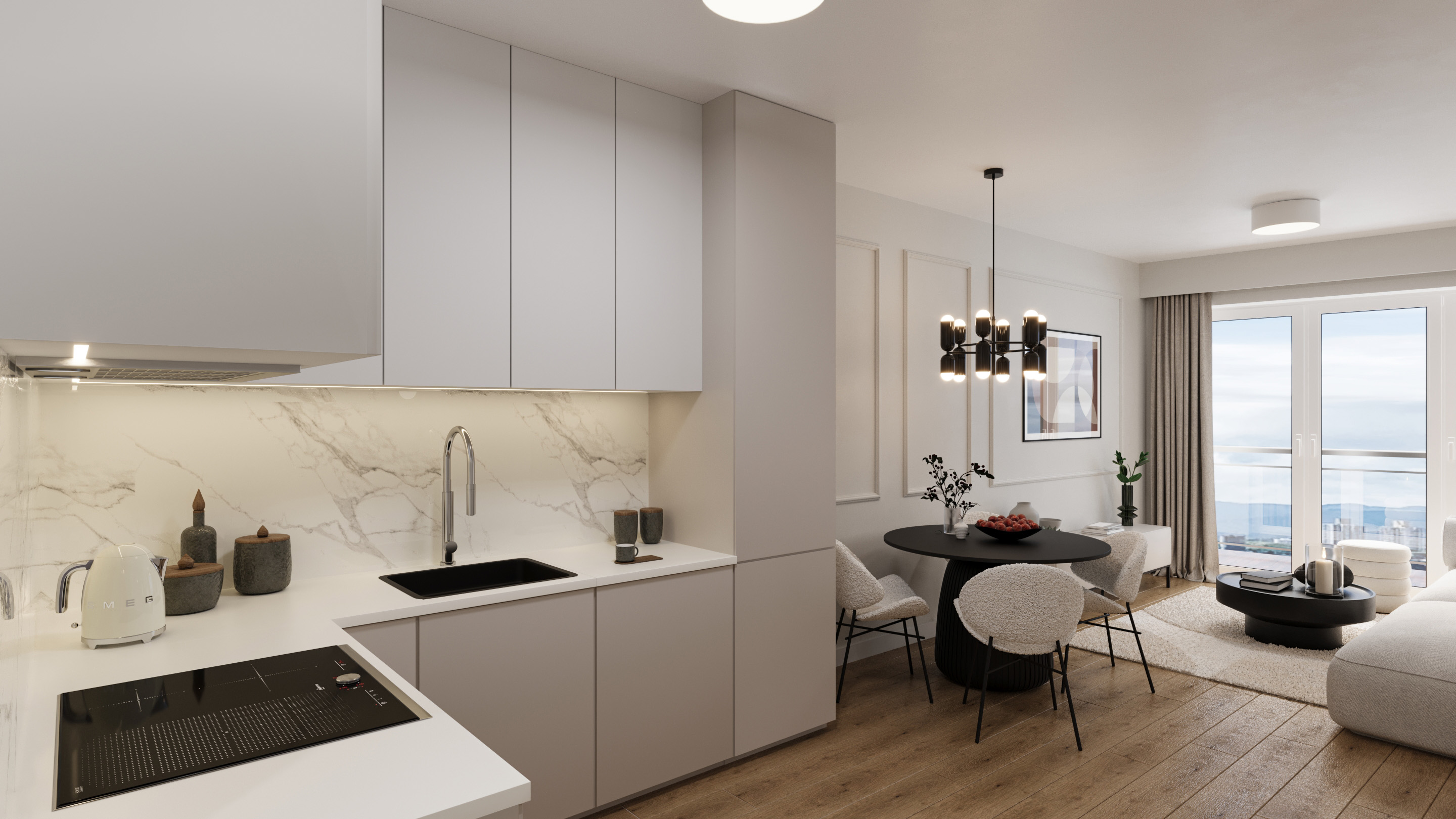
Developer Standard Apartment – What Does It Mean in Practice?
Although the term “developer standard” suggests a defined level of finish, in practice it varies widely between residential projects.
In one development, it may include:
complete electrical and plumbing installations,
smooth plastered walls,
prepared subfloors,
high-quality entrance doors with specific performance parameters.
In another, it may cover only the technical minimum required to hand over the unit, leaving a broad scope of finishing work to the buyer.
Differences may concern, among others:
type of wall plaster,
scope of electrical installation,
number of lighting points,
bathroom preparation,
quality of entrance doors,
screed execution.
The key documents are the information prospectus and the finishing standard specification. These precisely define which elements are included in the apartment price and which will require additional investment from the buyer.
According to Resi Capital experts analyzing finishing standards in the primary real estate market, most costly surprises after handover result from differences in the scope of the developer standard. Therefore, before purchasing a new build apartment, it is essential to compare project documentation point by point rather than relying solely on general marketing descriptions.
The more limited the developer standard, the greater the scope of finishing work required after handover. This directly translates into a higher budget, longer project timeline, and increased risk of unforeseen costs. A detailed analysis of the developer standard should be one of the key criteria when comparing real estate offers.
You may also consider: Developer Standard or Turnkey? What to Choose When Buying Property?
Apartment Finishing Costs – What Most Commonly Surprises Buyers?
The highest expenses are typically generated by rooms requiring multiple installations and specialized work — namely the bathroom and kitchen. These areas accumulate costs related to plumbing, electrical systems, built-in cabinetry, and surface finishes.
Additional expenses include:
flooring,
built-in wardrobes,
internal doors,
additional installations and design adjustments.
Initial cost calculations are often underestimated because they are based solely on material prices, without accounting for labor, preparatory works, or potential modifications.
In practice, the difference between the preliminary budget and actual finishing costs can be substantial. Some expenses only arise during implementation — for example, when additional leveling works are required, installations need adjustments, or the apartment must be adapted to meet functional design assumptions.
The less detailed the finishing plan before purchase, the higher the risk of exceeding the budget after handover.
Apartment Layout and Its Impact on Finishing Costs
The apartment layout directly affects the scope of finishing works and the number of necessary modifications. Not only the square footage matters, but also room proportions, wall arrangement, and the location of installations.
Apartments with complex layouts often require more intervention in installations and structural elements, automatically increasing execution costs.
Tenant changes (buyer-requested modifications) play a significant role. If introduced at an early construction stage, they may reduce finishing costs — for example, by better aligning electrical outlets or plumbing points with the intended layout. Changes made after handover are typically more expensive, more time-consuming, and involve additional demolition work.
Functional design has a direct impact on the final finishing budget. A seemingly cheaper apartment that requires extensive modifications may ultimately cost more than a unit with a higher initial standard.
How to Estimate the Real Finishing Budget Before Buying a New Apartment?
Planning finishing costs should begin before signing the developer agreement. At the apartment selection stage, buyers should thoroughly analyze:
the developer standard specification,
the apartment layout,
the scope of possible tenant changes.
This allows for a realistic estimation of the total cost required to make the apartment fully functional and move-in ready.
A common mistake is comparing offers based solely on the purchase price. A cheaper apartment may require significantly higher finishing expenditure, altering the true cost-effectiveness of the decision.
A well-planned and realistic finishing budget — including the full scope of works — helps avoid costly compromises and rushed decisions after handover.
Finishing costs are an integral part of the property purchase decision and should not be analyzed only after signing the contract. Estimating them in advance enables better comparison of developer offers, a more accurate assessment of the total acquisition cost, and helps avoid financial surprises during project execution.
FAQ – Frequently Asked Questions About Developer Standard
Does “developer standard” always mean the same scope of work?
No. The scope of a developer standard can vary significantly between residential developments. That is why it is essential to carefully review the project documentation before purchasing a new build apartment.
In practice, the most important documents are the information prospectus and the finishing standard specification. These define exactly which elements are included in the apartment price and which finishing works will require additional investment from the buyer.
Should finishing costs be considered when choosing an apartment?
Yes. Taking finishing costs into account allows you to compare the total property purchase cost, not just the listed price of the unit.
Including finishing expenses at the apartment selection stage helps avoid situations where a seemingly cheaper offer turns out to be more expensive after handover due to a lower developer standard.
Which finishing elements generate the highest costs?
The highest finishing costs typically involve:
the bathroom,
the kitchen,
flooring,
electrical and plumbing installations.
These areas require the most extensive work, materials, and labor. As a result, they are the most common sources of budget overruns when finishing a new build apartment.
Do tenant modifications always increase finishing costs?
No. If tenant-requested changes are introduced early in the construction process, they can actually reduce finishing costs and limit the need for later alterations.
Modifications made after the apartment handover are usually more expensive and involve additional demolition and adjustment work.
How can you avoid exceeding your budget after buying a new apartment?
The key is to plan the scope of finishing works and prepare a realistic cost estimate before signing the developer agreement.
It is also advisable to:
carefully compare developer standards in official documentation,
analyze the apartment layout and installation points,
include a financial contingency reserve for unforeseen expenses.
A proactive and well-structured approach to finishing costs significantly reduces the risk of financial surprises during the implementation phase of your real estate investment.